Frameless Glass Railing Systems: Costs & Engineering Guide
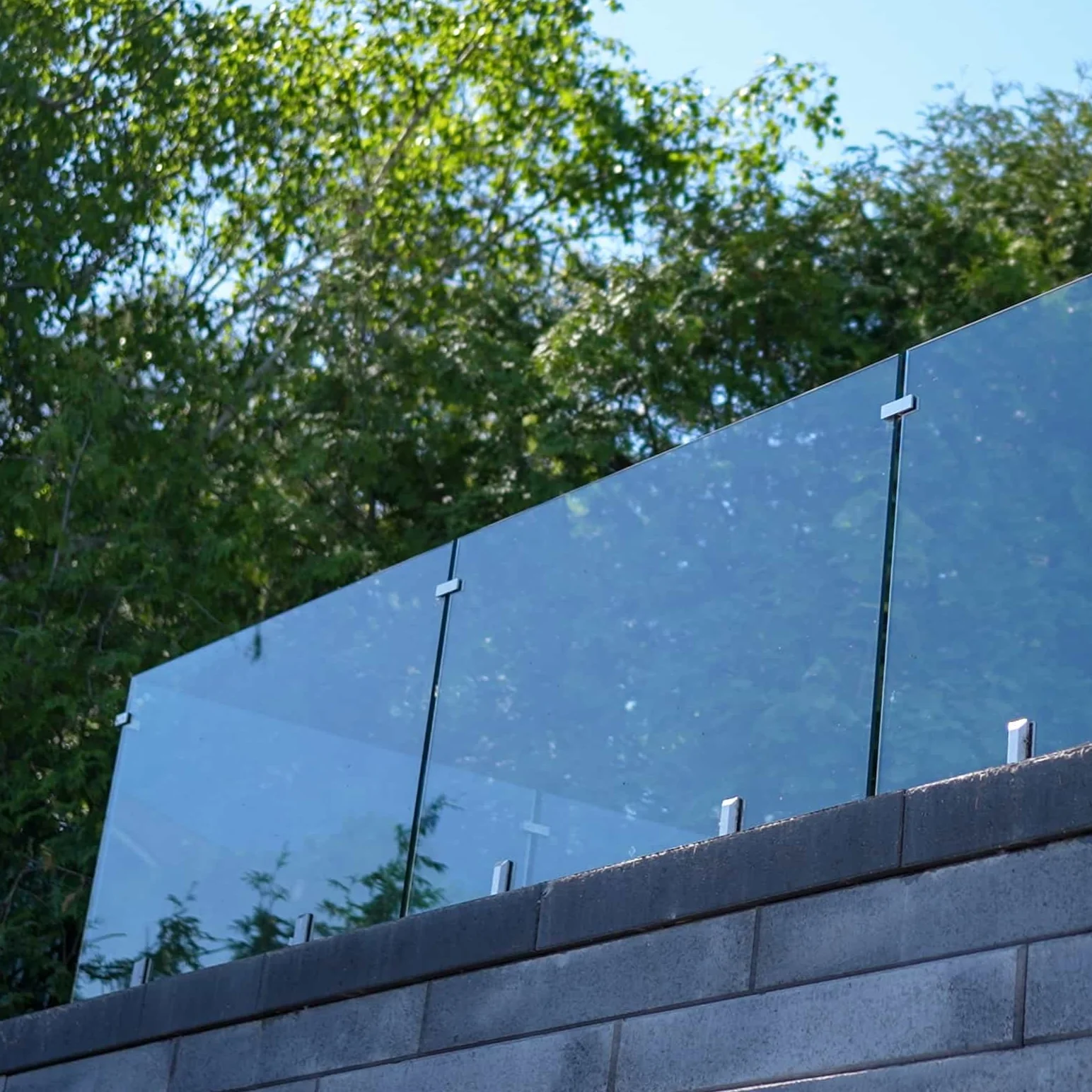
The integration of glass architecture into residential and commercial deck design represents a significant shift toward minimalist, modern aesthetics. Traditional wood, vinyl, or metal balusters naturally segment a view, creating a visual barrier between the elevated living space and the surrounding landscape. A frameless glass railing system bypasses this limitation by using thick, structural tempered or laminated glass panels supported entirely from the bottom or sides, eliminating the need for top rails, intermediate posts, or opaque framing borders.
Understanding the engineering specifications, structural requirements, and financial metrics associated with these high-end architectural systems is crucial before initiating an installation. This guide provides an objective, educational analysis of the mechanical components, mounting methodologies, and material variations that govern the overall project scope. Readers will learn how to evaluate their deck’s existing structural integrity, decipher safety glass classifications, budget for specialized hardware components, and establish long-term maintenance protocols to ensure absolute structural safety and visual clarity.
Overview of Frameless Glass Railing Systems
When evaluating a frameless glass railing system cost for decks, the primary calculation extends far beyond the surface cost of commercial glass. Unlike conventional railing materials that are forgiving during installation, a frameless glass boundary is an engineered safety barrier subjected to strict international and local building codes. These systems must be designed to withstand heavy wind loads, localized impact forces, and continuous structural pressure without relying on a perimeter metal frame to absorb or distribute the stress.
Property owners typically pursue this architectural choice to preserve unobstructed views of coastlines, mountain ranges, or manicured gardens while satisfying safety mandates for elevated platforms. Achieving a safe, optically perfect installation requires heavy, impact-resistant glass panels (typically 1/2-inch to 11/16-inch thick) paired with specialized, corrosion-resistant alloy anchoring hardware. Because the glass itself acts as the structural baluster, the condition of the underlying deck rim joists or concrete slab foundation dictates whether the installation will succeed or cause structural warping over time.
Hardware Engineering Classifications and Mounting Variations
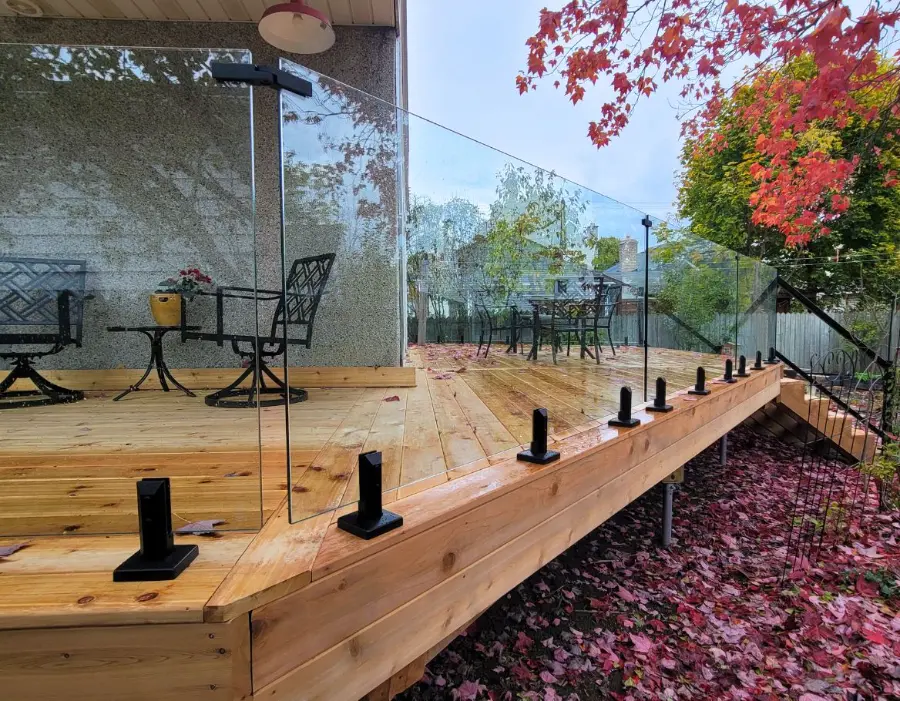
Frameless glass railings are categorized by the specific mechanical hardware used to anchor the base of the glass panels to the deck structure.
Structural Anchoring Methods
| Category / Type | Description | Common Use Case | Time / Cost / Effort Level |
| Surface-Mounted Spigots (Talon Grips) | Heavy-duty stainless steel mini-posts clamped to the floor, holding individual glass panels a few inches above the deck surface. | Wood or composite decks requiring direct surface attachment with minimal fascia alteration. | Medium time investment; Moderate cost; Moderate physical effort. |
| Fascia-Mounted Spigots (Side Mount) | Clamping hardware bolted directly to the exterior vertical rim joist or concrete beam, keeping the deck surface clear. | Small decks where maximizing internal usable floor space is a high priority. | Medium time investment; Moderate to High cost; High effort. |
| Structural Base Shoe Channel | A continuous U-shaped aluminum or steel track bolted to the deck, into which the entire bottom edge of the glass is dry-glazed or grouted. | Modern high-traffic commercial terraces or high-wind environments seeking absolute rigidity. | High time investment; Maximum material cost; Maximum physical effort. |
| Standoff Pin System (Button Mount) | Round stainless steel cylinders bolted through factory-drilled holes in the lower edge of the glass, suspending panels off the fascia. | Concrete multi-level decks or modern architectural staircases with exposed edge profiles. | High installation time; High hardware cost; Extreme precision effort. |
Choosing the appropriate anchoring methodology depends on the deck’s primary structural material and the timing of the installation. A continuous base shoe channel is highly robust but requires extensive reinforcement of the deck edge, making it easiest to integrate during new construction. Conversely, heavy-duty spigots are more modular and adaptable, allowing them to be retrofitted onto existing wood or composite deck framing, provided the perimeter joists are sufficiently blocked.
Practical Spatial Scenarios and Structural Applications
To understand how these physical mounting options behave under varying structural and environmental parameters, examine three distinct real-world applications.
Scenario 1: The Suburban Elevated Composite Deck
An installation over a newly constructed, 15-by-20-foot wood-framed deck finished with synthetic composite boards, requiring a minimalist boundary that blends into a backyard wooded landscape.
-
Key Components: Duplex 2205 stainless steel surface-mounted spigots, 1/2-inch thick clear tempered safety glass panels, hidden structural blocking beneath the composite deck boards, and a slim, low-profile stainless steel top-cap rail for code compliance.
-
Relevance: This baseline residential scenario demonstrates how to integrate heavy glass structures with standard wood framing systems using modular spigots that minimize structural alteration.
Scenario 2: The High-Wind Coastal Marine Balcony
A multi-level concrete balcony facing aggressive ocean winds, salt spray, and extreme weather changes.
-
Key Components: A continuous aluminum structural base shoe channel surface-anchored into the concrete using stainless steel wedge anchors, 11/16-inch thick laminated-tempered glass with an ionoplast interlayer (e.g., SentryGlas), and hidden interior gutter drains.
-
Relevance: This application represents the highest tier of structural safety, showcasing how laminated glass and continuous channels work together to remain standing even if one of the glass layers fractures completely due to flying debris.
Scenario 3: The Minimalist Fascia-Mounted Penthouse Terrace
A urban rooftop deck designed to maximize every inch of premium floor space while delivering an absolute perimeter viewing area.
-
Key Components: Heavy-duty standoff pins (button mounts) bolted directly through the exterior vertical concrete fascia beam, 9/16-inch laminated glass panels, and an ultra-clear, low-iron glass composition to eliminate the standard green tint found in thick glass.
-
Relevance: This layout shifts all structural hardware completely outside the deck’s usable footprint, offering an uncompromised floor layout while requiring specialized exterior scaffolding or crane access to execute safely.
Comparative Evaluation
Scenario 1 balances modular simplicity with residential engineering guidelines, using surface spigots that are accessible to standard specialty builders. Scenario 2 trades modularity for extreme durability, utilizing thick laminated glass and continuous base tracks to withstand hurricane-force wind loads. Scenario 3 focuses heavily on spatial optimization and high architectural finish quality, trading ease of installation for an uninterrupted vertical plane along the deck’s outer edge.
Comprehensive Budgetary and Resource Parameters
Developing an accurate financial baseline is critical when dealing with glass installations. When calculating the frameless glass railing system cost for decks, the overarching budget must account for structural framing reinforcement, custom factory glass fabrication (including precise hole drilling), architectural hardware alloys, and specialized, high-precision trade labor.
Sample Project Budget Framework
| Category | Estimated Amount / Effort | Explanation | Optimization Tips |
| Engineering, Wind Calculations & Permits | $500 – $2,000 | Structural blueprint certifications, municipal zoning checks, and wind-tunnel load calculations for high elevations. | Select manufacturers who provide pre-tested, code-compliant ICC-ES reports to speed up city permits. |
| Structural Joist Blocking & Reinforcement | $800 – $2,500 | Adding dense, pressure-treated structural timber blocks or steel brackets inside the deck rim joists to prevent wood twisting. | Execute all frame blocking before installing the final composite or wood surface deck boards. |
| Premium Anchoring Hardware (Alloys/Channels) | $1,500 – $5,500 | Purchasing Duplex 2205 stainless steel spigots, structural base shoe tracks, rubber gaskets, and compression mechanisms. | Use marine-grade Duplex 2205 stainless steel instead of standard 304 alloy to prevent rust pitting in coastal environments. |
| Custom Safety Glass Panels | $3,000 – $12,000 | Ordering factory-cut, polished, tempered or laminated glass panels manufactured to exact dimensional tolerances. | Standardize panel widths (e.g., 48-inch increments) across the deck run to minimize custom factory glass-cutting fees. |
| Precision Installation & Alignment Labor | $2,500 – $7,000 | Labor for precise layout marking, leveling heavy panels, drilling structural anchors, and final alignment tracking. | Hire specialized glass glazing contractors; standard finish carpenters often lack the suction-lifters needed for rapid glass handling. |
Note: The cost parameters and resource metrics outlined above serve as illustrative examples based on broad national historical construction indices. Final quotes will vary based on regional labor structures, glass thickness selection, localized wind-zone mandates, and site accessibility limitations.
Project Delivery Strategies and Implementation Channels

Property owners can execute the procurement and assembly phase using several distinct project management formats, depending on their technical experience and risk tolerance.
1. Specialized Glass Glazing Contractors
Engaging a commercial or high-end residential glass glazing firm that focuses exclusively on storefronts, shower enclosures, and glass railings.
-
Advantages: Possess specialized suction cranes and lifting rigs; provide precise field measurements using digital laser scanners; assume full liability for glass breakage during transport and installation.
-
Disadvantages: Typically carries the highest management overhead and labor markup fees.
2. General Decking Contractors with Modular System Sourcing
Hiring a standard outdoor construction company that procures fully pre-engineered, modular frameless glass kits from national architectural suppliers.
-
Advantages: Seamless coordination between the construction of the primary deck frame and the installation of the final railing perimeter; simplified scheduling.
-
Disadvantages: Limited customization options; layouts must conform precisely to the supplier’s standardized glass panel lengths.
3. Advanced Architectural Direct Procurement
The property owner independently coordinates with an engineered glass manufacturer to supply custom panels according to raw CAD layouts, and hires independent local installers for assembly.
-
Advantages: Eliminates middle-tier general contractor markups, providing the lowest direct material investment.
-
Disadvantages: The homeowner assumes complete financial risk for incorrect field measurements, shipping delays, and accidental panel shattering on-site.
Mitigating Structural Risks, Code Compliance, and Engineering Challenges
Frameless glass boundaries are heavy, unforgiving structures that amplify small framing defects into catastrophic installation errors if planning is poor.
-
Neglecting Structural Rim Joist Deflection (Wood Frame Warping): Glass panels are incredibly heavy (a typical 48-inch panel can weigh over 80 pounds). If spigots are bolted into a standard single wood rim joist without heavy internal solid wood blocking and structural tension ties, the weight of the glass will pull the joist outward over time, causing the glass panels to sag, lean, and fall out of alignment. Prevention: Fasten triple-thick structural lumber blocking behind every spigot location, tying the perimeter rim joist directly back into the primary deck floor joist matrix using structural ledger screws.
-
Using Tempered-Only Glass Without a Top Rail on High Decks: Many local building codes mandate that if a frameless glass system is installed on a deck elevated significantly above grade, it must use laminated safety glass, or it must feature a continuous top rail fastened to at least three panels. If a single tempered-only panel shatters from a severe impact, a dangerous void is left in the safety barrier. Prevention: Check your local International Residential Code (IRC) updates; specify laminated glass featuring a structural polyvinyl butyral (PVB) or SentryGlas interlayer to ensure the panel remains structurally standing even if cracked.
-
Overtightening Mechanical Hardware Connections: Metal expanding hardware or clamping spigots screwed directly against raw glass without proper isolation pads create concentrated stress points. As the deck shifts or temperature expands the metal, the glass panel will spontaneously shatter. Prevention: Never allow metal-to-glass contact; always utilize factory-supplied EPDM rubber bushings, nylon gaskets, and specialized torque wrenches to dial in exact clamping pressures.
Long-Term Maintenance and Structural Lifecycle Care
While glass does not suffer from the insect rot, rust, or paint delamination found in traditional wood and metal systems, it requires regular, structured maintenance to preserve its performance and look.
-
Ongoing Best Practices Checklist:
-
Monthly: Wash panels with a mild, biodegradable soap and water mixture to remove atmospheric salt crusts, bird droppings, and industrial pollutants. Avoid abrasive scrubbing pads or alkaline chemical cleaners that can permanently etch the glass surface.
-
Quarterly: Inspect base spigots and standoff pins for physical tightness. Verify that the internal nylon pressure screws have not backed out due to deck vibrations or wind rattling.
-
Annually: Check the rubber drainage weepholes or gaskets inside base shoe channels to ensure moisture drains freely out of the track and does not cause standing water to corrode internal pressure gaskets.
-
-
Surface Protection Optimization:
-
Apply a high-quality hydrophobic polymer coating (similar to ceramic coatings used on automotive glass) to both sides of the panels during installation. This creates a water-repellent seal that significantly reduces hard-water spotting and cuts routine cleaning cycles in half.
-
Performance Documentation and Engineering Records
Maintaining an organized archive of structural data ensures that subsequent home inspections, insurance valuations, or building renovations proceed smoothly without technical friction.
Organizing Information Systematically
Property owners should catalog all architectural blueprints, engineering wet-stamps, material test data sheets, and local permit sign-offs in a permanent home maintenance record.
Illustrative Tracking Profiles
-
Example A: A homeowner files the technical specifications certificate showing that their frameless glass system is manufactured from certified SGCC (Safety Glazing Certification Council) laminated safety glass, satisfying a home inspector’s safety audit during a property sale.
-
Example B: Following a severe localized windstorm, an owner easily locates the original material invoice for their marine-grade Duplex 2205 stainless steel hardware, streamlining a comprehensive replacement valuation claim through their property insurance provider.
-
Example C: A contractor records date-stamped photographs of the internal structural joist blocking and structural tension ties before the final deck boards are laid, providing permanent physical proof of sub-surface building code compliance.
Closing Summary
Successfully managing a frameless glass railing system cost for decks requires balancing premium material procurement with strict structural engineering standards. While frameless glass represents a significant upfront financial commitment compared to conventional balusters, it offers unmatched architectural transparency, modern design appeal, and exceptional durability against rot and weathering. By prioritizing rigid sub-frame perimeter reinforcement, selecting the correct safety-glass chemistry (tempered versus laminated), and utilizing specialized marine-grade alloys, property owners can secure a safe, durable outdoor architectural asset that maintains its structural integrity and view preservation for decades.
Frequently Asked Questions (FAQ)
What is the difference between tempered and laminated glass for deck railings?
Tempered glass is a single layer of glass that has undergone thermal heat treatment to increase its strength; if broken, it shatters into thousands of small, relatively harmless pebble-like pieces. Laminated glass consists of two layers of tempered glass permanently bonded together by a clear plastic interlayer (such as PVB or SentryGlas); if the glass breaks, the fragments adhere to the internal interlayer, keeping the safety barrier structurally intact.
Can a frameless glass railing system handle high coastal wind zones?
Yes, provided it is engineered correctly. Continuous heavy-duty base shoe channels or thick, fascia-mounted standoff pins paired with 11/16-inch thick laminated-tempered glass are frequently specified on coastal skyscrapers and oceanfront terraces because they are specifically engineered to pass rigid wind-tunnel and pressure-load building codes.
Why does glass used in railings sometimes have a green edge tint, and can it be removed?
Standard architectural glass contains a natural amount of iron oxide, which becomes highly visible as a deep green hue along the polished exposed edges of thick glass panels. To eliminate this green tint and achieve absolute clear transparency, property owners can specify “low-iron” glass (such as Starphire ultra-clear glass), which undergoes a specialized refining process to remove iron impurities, though it carries a premium material cost.